
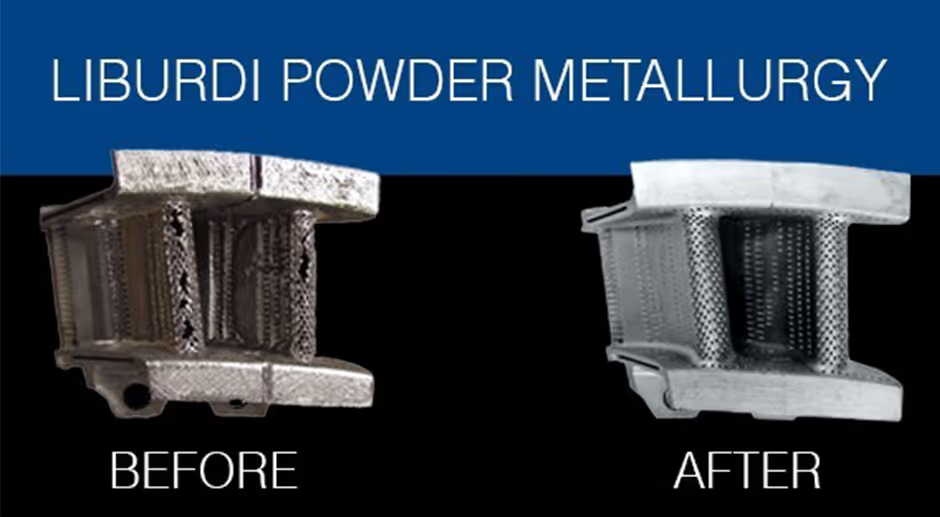
Gas turbine components operating in high-temperature environments are exposed to extreme thermal stress, cracking, and material degradation over time. Liburdi Powder Metallurgy (LPM®) is an advanced gas turbine repair process designed to restore damaged superalloy components, recover lost material, and extend component service life while minimizing distortion compared to conventional repair methods.
Liburdi Powder Metallurgy (LPM®) is an alternative metal placement process. The key to understanding LPM® is that it is a process and not a product. The LPM® process takes gas turbine components where the material is missing or surface is damaged. LPM® adds or replaces material needed to repair or reconstruct the product and strengthen its integrity. Liburdi's LPM® process can be made of a range of superalloy materials dependent on specific applications.
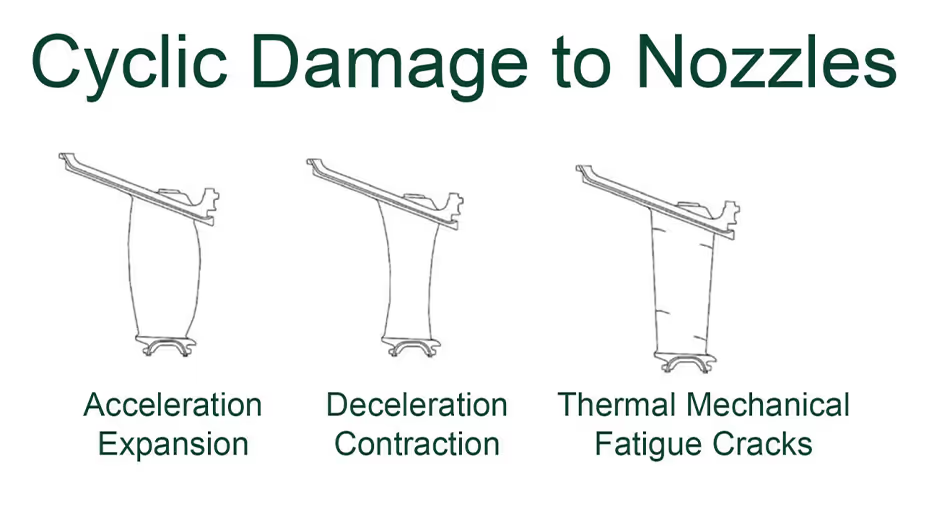
Liburdi is proficient in exposed gas turbine component repair. Components such as turbine section nozzle guide vanes tend to crack in service due to heat. When gas turbines accelerate, the rush of hot gas expands the airfoils while the endwalls remain cool, resulting in compressive forces causing deformations in the metal. Alternatively, when gas turbines decelerate, the opposite occurs as cool air contracts the airfoils while the endwalls remain expanded.
This cycle when repeated causes slowly growing cracks known as thermo-mechanical fatigue (TMF) in the gas turbine parts. Additional TMF can occur on areas with different areas of thickness causing temperature differentials. This is where Liburdi Powder Metallurgy comes into place.
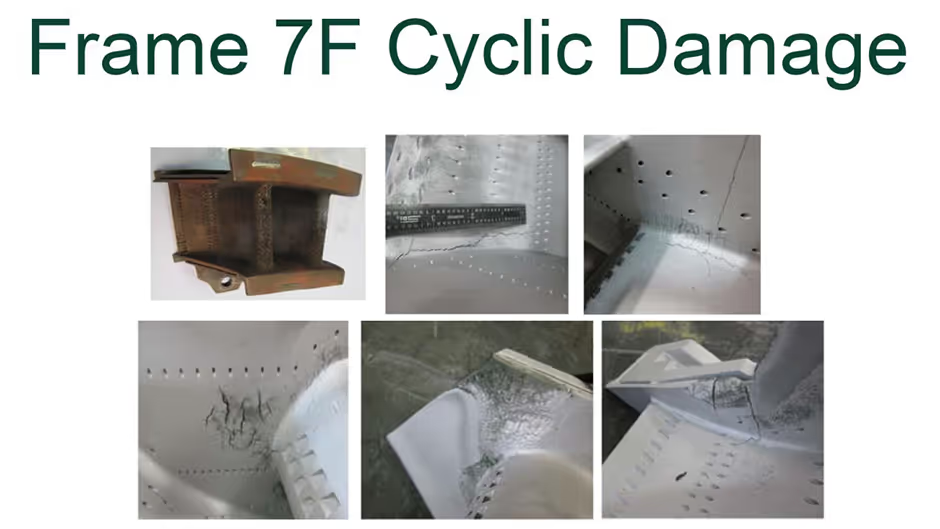
LPM® replaces lost metal due to cracking, impact, or corrosion wastage. LPM® can extend 10 times the repairable defect size limits of conventional wide gap processes. LPM® is especially effective at building up surface areas that are normally impossible to repair by brazing and difficult to weld.
Liburdi Powder Metallurgy uses high-strength filler metals employing a highly modified wide gap braze technique. Since the filler is heat-treatable high-strength nickel-based superalloy, it can be adjusted to match the base metal to provide useful mechanical properties.
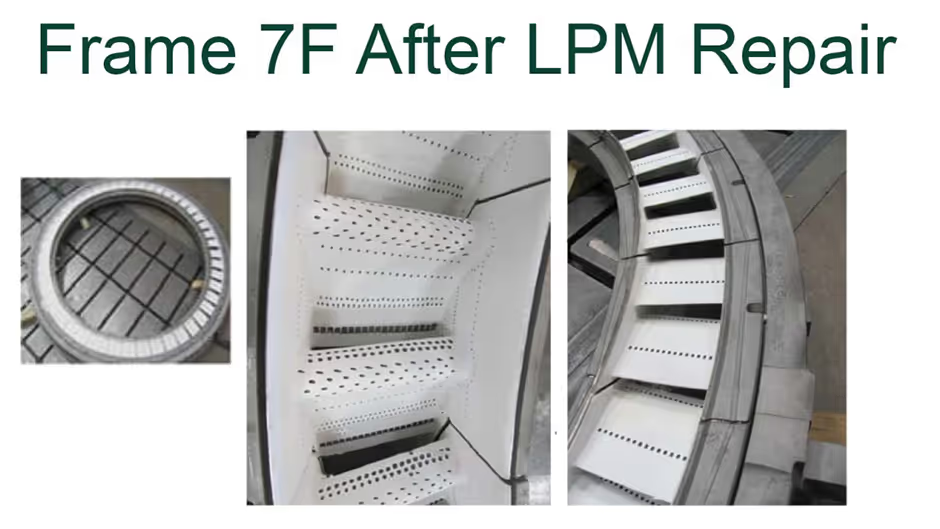
LPM® allows for innovative design freedom and is a cost-effective alternative to the distortion of conventional gas turbine weld repairs. LPM® is exclusively available through Liburdi. If you're interested in learning more about how Liburdi's LPM® process can help with your turbine component repair, contact info@liburditurbineservices.com.